
Role Product Designer, May - July 2022
Team 4 Product Managers & Product Owners, 20+ Developers
NCR Voyix Analytics
Using Research to Identify Customers’ Needs
Overview
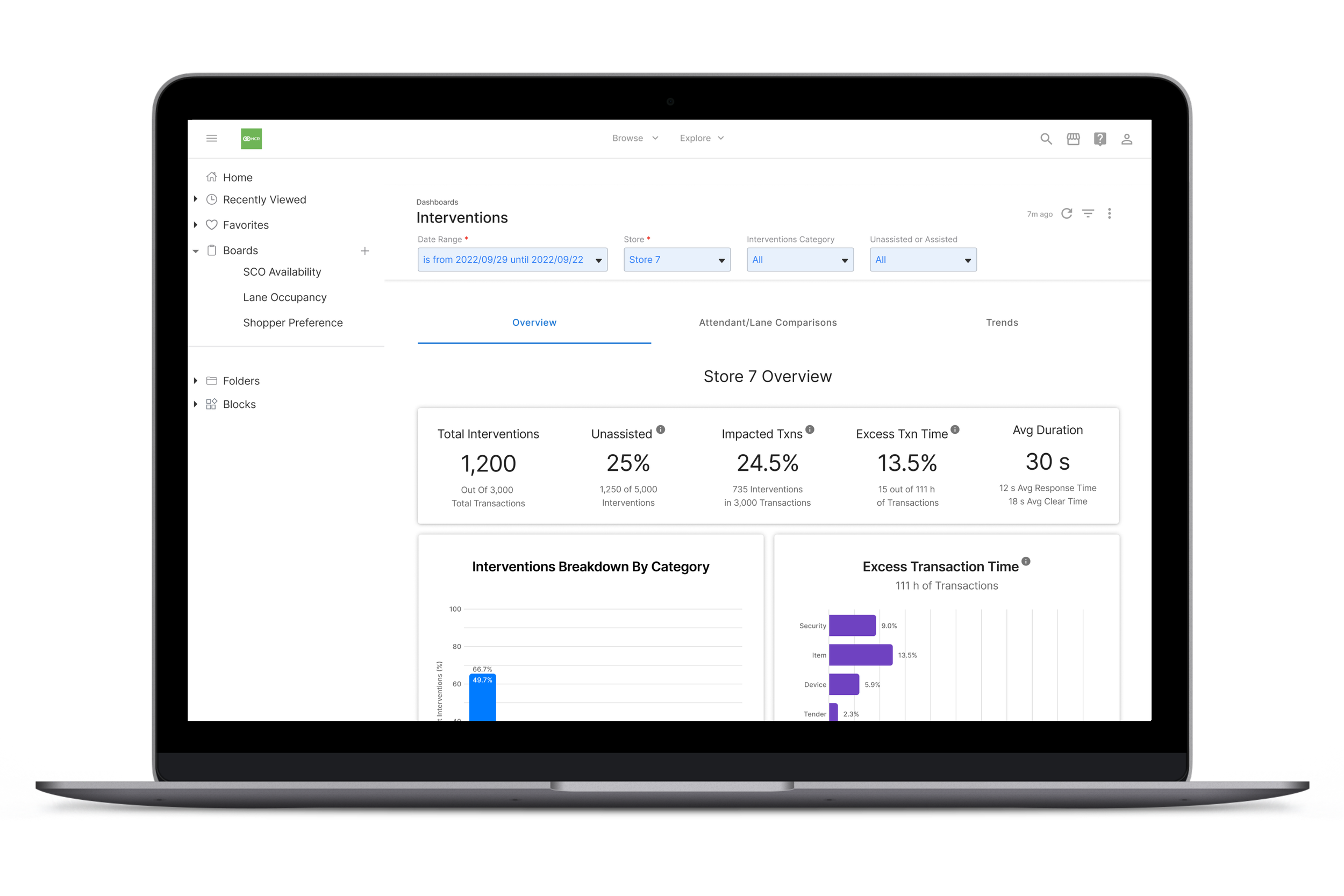
NCR Voyix Analytics is a reporting tool for enterprise retail operations, designed to help store managers and teams analyze interventions across self-checkout, front-end, and employee performance.
This project came early in my time at NCR and marked one of my first experiences defining a product from a loosely scoped concept. It revealed how much stronger design outcomes become when we lead with research instead of assumptions — a lesson that shaped how I approach every project since.
Background
When I joined the project, the problem statement was still unclear. The directive was simply to “design dashboards that give insights,” but no one had defined what “insights” meant or who would use them.
Rather than jump into UI design, I proposed running a short research sprint with internal stakeholders and end users. Through interviews, we identified recurring themes around:
Loss prevention
Identifying issues to improve sales
Labor optimization
Tracking the source and duration of interventions
These early conversations helped me reframe the goal: building charts to building clarity.


Defining the MVP
Based on the insights, I defined key user stories that shaped the MVP:
View a high-level overview of interventions before drilling into details
Track how long interventions take to resolve
Identify the source and frequency of interventions
Benchmark store performance across regions
View improvements and patterns over time
These became the foundation of the dashboard experience and guided how data visualization should support quick, confident decision-making — not overwhelm users with complexity.
Design
I explored multiple data visualization layouts and worked closely with the product and data teams to balance readability, density, and context. The final design prioritized clarity over visual flair:
Graphs surfaced only the most actionable metrics
Summaries gave managers a snapshot before exploring details
Benchmarking views enabled comparison across stores
The design’s simplicity helped managers immediately identify issues, reducing the time it took to diagnose performance gaps.
Results & Reflections
This project taught me some of my most valuable early lessons as a product designer:
Functional doesn’t mean usable. Just because something works doesn’t mean it drives understanding or adoption.
Usable doesn’t mean sustainable. A product must evolve with its users and data, not just look good on release.
Advocate for design — respectfully and consistently. The best outcomes come when designers make space for research, evidence, and critical questioning early on.
Looking back, this project set the foundation for how I now approach enterprise systems: define the problem first, then design toward clarity.